
Mon - Sat 9:00 - 17:30
The textile industry is one of the oldest and most vital manufacturing sectors globally and in India. It encompasses the production of fibres, yarn, fabrics, dyeing and finishing, and is a key driver of employment and export revenue. Textile units range from small power-loom units to large integrated mills processing cotton, wool, silk and synthetic fibres.
The nature of the raw materials — flocks of loose fibres, yarns, fabrics and chemicals — makes textile facilities inherently fire-prone. Without proper management of fire hazards, even a small ignition source can escalate into a major disaster.
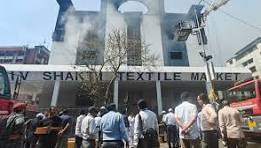
Surat Textile Market Fires (2025) – A massive blaze at the Raj Textile Market in Surat burned for over 12 hours, using nearly 18 lakh litres of water and injuring five firefighters. Dense smoke and highly flammable polyester stocks intensified the situation. (The Times of India)
Kuberji Textile World Fire, Surat (2025) – A short circuit triggered a fire on the 10th floor. The in-house fire system helped contain damage until firefighters arrived. (The Times of India)
Ludhiana Knitwear Factory Fire – A fire at a textile factory in Qadian village highlighted critical safety gaps due to narrow access roads and absence of hydrants. (The Times of India)
Lucky Textile Blaze, Ludhiana – Thick smoke and inadequate fire measures caused rapid fire spread, prompting evacuation of adjacent buildings. (The Times of India)
Central Textile Factory Fire, Solapur – A short circuit fire claimed lives, emphasizing need for improved infrastructure and fire safety audits. (The Times of India)
2012 Dhaka Garment Factory Fire – One of the worst industrial fires in the region killed over 100, driven by inadequate exits and combustible materials. (Wikipedia)
2025 Dhaka Garment Factory Fire – A tragic fire in Mirpur, Dhaka killed 16 workers, again underscoring global fire safety challenges. (Wikipedia)
These fires demonstrate how flammable materials, electrical faults and poor safety systems can amplify small incidents into large disasters.
Below is a simplified process flow of a typical textile manufacturing unit:
Raw Fibre → Opening & Cleaning → Carding → Spinning → Winding → Weaving / Knitting → Dyeing & Finishing → Inspection → Packing → Storage → Dispatch
At each stage, different fire risks exist due to fibres, lint, oils, chemicals, heat and electrical equipment.
The textile manufacturing environment presents several fire hazard factors:
Cotton lint, fibres and yarn are highly flammable.
Loose fibres accumulate on machinery and ducts, creating a continuous combustible load. (synergyfire.in)
Overloaded circuits, faulty wiring and lack of maintenance can lead to short circuits — a common ignition source. (synergyfire.in)
High-speed spinning, carding and drying machines generate heat; friction or malfunction can ignite nearby materials. (synergyfire.in)
Airborne dust can form explosive clouds in enclosed spaces.
Static electricity buildup in synthetic fibres may produce sparks. (synergyfire.in)
Dyeing and finishing areas involve flammable liquids; spills or poor storage can cause fires. (synergyfire.in)
Finished goods warehouses often house stacks of fabric and garments — adding fuel loads if not properly arranged or separated.
Fire safety in textile units must combine prevention, detection, suppression and evacuation systems.
Smoke and heat detectors with automatic alarm system covering all process and storage areas.
Manual call points at strategic locations.
Portable Extinguishers – ABC powder, CO₂ and foam types, suited to different classes of fire.
Automatic Sprinkler Systems – Wet/dry pipe systems throughout workshops and warehouses help control rapidly spreading fires.
Hydrant & Hose Reel Networks – Easily accessible hydrants and hose reels to support firefighting efforts.
Gas Suppression/Clean Agent Systems – For electrical rooms or sensitive areas (e.g., FM-200, Novec). (synergyfire.in)
Adequate fire pumps with reliable water reservoirs ensure uninterrupted supply.
Pumps & standbys sized to meet system demand.
Fire-fighter breathing apparatus (SCBA), helmets, gloves and heat-resistant suits help protect responders. (Wikipedia)
Well-marked exits, evacuation plans, assembly points and regular drills.
National Building Code of India (NBC) Part 4 – Fire & Life Safety mandates fire detection, suppression, exits, hydrant systems and more. (Consultivo)
Bureau of Indian Standards (BIS) Codes such as:
IS 3079 – Code of practice for fire safety of cotton textile mills. (Law Resource)
IS 2189 – Fire detection & alarm systems. (Consultivo)
IS 3844 – Internal hydrants & hose reels. (Consultivo)
IS 15105 – Automatic sprinkler systems. (Consultivo)
IS 15683 – Portable fire extinguishers. (Consultivo)
NFPA Codes & Standards (National Fire Protection Association) define global best practices across industrial fire safety, alarms, sprinklers and maintenance protocols. (NFPA)
NFPA 101 – Life Safety Code (egress & fire protection requirements). (resources.impactfireservices.com)
NFPA 13 – Installation of sprinkler systems. (NFPA)
NFPA 70B – Electrical equipment maintenance to prevent fire risks. (Wikipedia)
Compliance with these standards not only helps safeguard lives and assets, but also enhances business continuity and insurance credibility.
Fires in textile units can be devastating — causing loss of life, property damage, production stoppages, legal penalties, and reputational harm. Prevention through hazard identification, stringent systems, maintenance and training is more effective than reactive measures.
Inadequate housekeeping, poor electrical maintenance or lack of firefighting infrastructure are often cited causes when fires escalate. Regular fire risk assessments and audits are essential to reduce these vulnerabilities.
Agni Raksha Niti emerges as a comprehensive and practical solution specifically tailored to address fire safety challenges in industrial environments — including textile units. It incorporates:
Fire risk assessments and hazard mapping
Compliance frameworks aligned with NBC, BIS & NFPA
Customized firefighting system design and implementation
Training modules for staff & emergency response teams
Periodic audits, maintenance plans and documentation
By integrating prevention, protection, response and compliance into a unified approach, Agni Raksha Niti helps textile businesses meet global fire safety standards while safeguarding life and property — a step forward from yesterday’s insights. (As noted in your article yesterday.)

We offer a full suite of HSEFS services designed to address your specific challenges and goals :
HSE Consulting & Advisory,
HSE Auditing & Assurance,
HSE Training & Development,
Implementation & Support,
Environmental Services
GST: 24ABDCA0826H1Z3
CIN: U71100GJ2025PTC163795
Copyright 2025. Agni Raksha Niti Engineering Consultancy Services Pvt. Ltd. All Rights Reserved.