
Mon - Sat 9:00 - 17:30
The sugar industry transforms sugarcane into refined sugar through a sequence of mechanical and thermal operations. While process names vary slightly regionally (e.g., India, Brazil, USA), the typical stages are:
Cane Reception & Cleaning – Cane delivered from fields is washed and prepared for crushing.
Crushing / Milling – Cane is crushed to extract juice; leaves fibrous bagasse.
Clarification & Filtration – Juice is heated and chemicals added to remove impurities.
Evaporation & Crystallization – Juice is boiled to concentrate and crystallize sugar.
Centrifugation & Drying – Centrifuges separate crystals from molasses; sugar is dried.
Storage & Packing – Finished sugar is stored in silos and packed for sale.
Throughout these processes, combustible materials (bagasse, molasses, sugar dust) and heavy machinery create multiple fire safety hazards. Combustion and explosion risks are especially serious where fine particulate sugar dust is airborne and ignition sources are present. (ChiniMandi)
Fine sugar particles from milling, drying, and handling can become suspended in air. This creates dust clouds capable of rapid combustion and even explosions if ignited by heat, sparks, static discharge, or hot surfaces. Secondary explosions often follow initial deflagration events, causing extensive damage. (ChiniMandi)
High-temperature boilers used for juice evaporation generate fire hazards through:
Fuel leaks
Flame impingement
Inadequate maintenance
Poor combustion control or boiler tube rupture can lead to fires. (ChiniMandi)
Molasses is combustible; leaks and spills in storage areas raise fire risks, particularly when combined with heat sources or inadequate housekeeping. (ChiniMandi)
Faulty electrical equipment, short circuits, overheated bearings on conveyors, and inadequate grounding can all create ignition sources that ignite dust or flammable materials. (ChiniMandi)
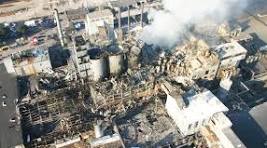
In February 2008, the Imperial Sugar refinery in Georgia suffered a devastating explosion and fire when accumulated sugar dust ignited in the packaging/storage area beneath silos. The blast killed 14 workers and injured dozens; secondary explosions occurred as dust ignited throughout the facility. Poor housekeeping and outdated construction were key contributing factors. (Wikipedia)
India has seen multiple reported dust fires in sugar mills, such as a spark from electrical short-circuiting igniting sugar dust in Uttar Pradesh (2020) and an explosion in a newly installed dust collector in Karnataka (2020). While these events caused property loss and required firefighting response, they also highlight the real world hazard of combustible sugar dust accumulations. (dustsafetyscience.com)
Sugar processing facilities must comply with both Indian fire safety regulations (e.g., NBC National Building Code of India, Factories Act Section 38) and international codes (primarily NFPA standards for combustible dust and industrial fire protection).
• National Building Code of India (NBC) – Part IV (Fire & Life Safety) provides minimum requirements for fire zones, means of egress, fire detection and alarm systems, and fixed firefighting installations depending on occupancy type. (Shubh Fire and Safety Equipments)
• Factories Act, 1948 (Section 38) mandates accessible fire extinguishers, trained fire response teams, clear escape routes, and regular drills. (safetysaarthi.com)
Passive Fire Protection (PFP) Requirements
Fire-resistant structural elements (walls, doors with appropriate fire ratings)
Compartmentation to contain fires
Safe means of egress (stairways, illuminated exits)
Segregation of high-risk areas such as boiler rooms and bagasse storage
Active Fire Protection (AFP) Requirements
Hydrant systems, sprinklers, and hose reels
Automatic detection systems (smoke/heat)
Portable fire extinguishers (ABC, CO₂, foam)
Emergency lighting & alarm systems
Because sugar dust is a combustible particulate, relevant NFPA standards set best practices for preventing and mitigating fire and explosion hazards:
Key NFPA Standards
NFPA 61: Fires and dust explosions in agricultural & food processing facilities. (Occupational Health & Safety)
NFPA 652: Fundamentals of combustible dust hazard management (Dust Hazard Analysis required). (dekra.in)
NFPA 654: Prevention of fire and dust explosions in manufacturing and handling of particulate solids. (NFPA)
NFPA 68: Explosion protection by deflagration venting. (foodengineeringmag.com)
NFPA 69: Explosion prevention systems. (foodengineeringmag.com)
NFPA 70 (NEC): Electrical safety for classified hazardous locations where dust may accumulate. (Occupational Health & Safety)
AFP Measures per NFPA
Explosion suppression & isolation systems
Automatic venting in dust collection units and silos
Spark detection & extinguishing systems in conveyors, bins
Fire alarm and detection integrated with emergency response
PFP Measures per NFPA
Dust housekeeping & cleaning schedules to prevent accumulations
Proper ventilation and dust extraction systems
Structurally rated fire barriers and spatial separation
Safe equipment design with grounded, intrinsically safe electrical installations
Together, these standards help form a comprehensive fire safety strategy for sugar mills.
To minimize fire risks, mills must adopt both engineering controls and administrative programs:
Dust collection & ventilation systems with explosion protection features
Explosion vents & suppression systems on processing equipment
Spark detection & extinguishing on conveyors and pneumatic lines
Automatic sprinklers & hydrants in storage, processing halls, and boiler rooms
Regular Dust Hazard Analysis (DHA) per NFPA 652
Housekeeping schedules to eliminate fugitive dust
Fire drills and employee training
Hot work permits and maintenance protocols
Agni Raksha Niti is positioned as a comprehensive fire safety management partner for the sugar industry. Its core strengths include:
• Detailed evaluation of sugar plant hazards, including dust, boiler systems, electrical sources, and storage areas.
• Compliance checks against Indian fire codes (NBC, Factories Act) and international NFPA standards.
• Design and specification of active systems (sprinklers, alarms, suppression, spark systems) and passive protections (fire-rated structures, compartmentation).
• Engineering services for explosion protection in dust collection and storage.
• Fire response training, evacuation drills, and Dust Hazard Analysis (DHA) training for plant personnel.
• Oversee installation, testing, and certification of systems.
• Liaise with authorities for fire NOCs and compliance documentation.
By integrating risk assessment, design, implementation, and training, Agni Raksha Niti helps sugar mills achieve comprehensive, sustainable fire safety.
Fire safety in the sugar industry requires holistic management of combustible dust, thermal processes, electrical hazards, and human factors. Learning from past incidents like the 2008 Imperial Sugar explosion underscores the importance of proactive standards compliance and engineering controls. Combining Indian regulatory requirements with international best practices (NFPA) and the integrated services offered by Agni Raksha Niti creates an effective framework for safeguarding lives, property, and operations in sugar manufacturing.

We offer a full suite of HSEFS services designed to address your specific challenges and goals :
HSE Consulting & Advisory,
HSE Auditing & Assurance,
HSE Training & Development,
Implementation & Support,
Environmental Services
GST: 24ABDCA0826H1Z3
CIN: U71100GJ2025PTC163795
Copyright 2025. Agni Raksha Niti Engineering Consultancy Services Pvt. Ltd. All Rights Reserved.